

Cleantech Sunday Returns to Ukraine for the Second Time
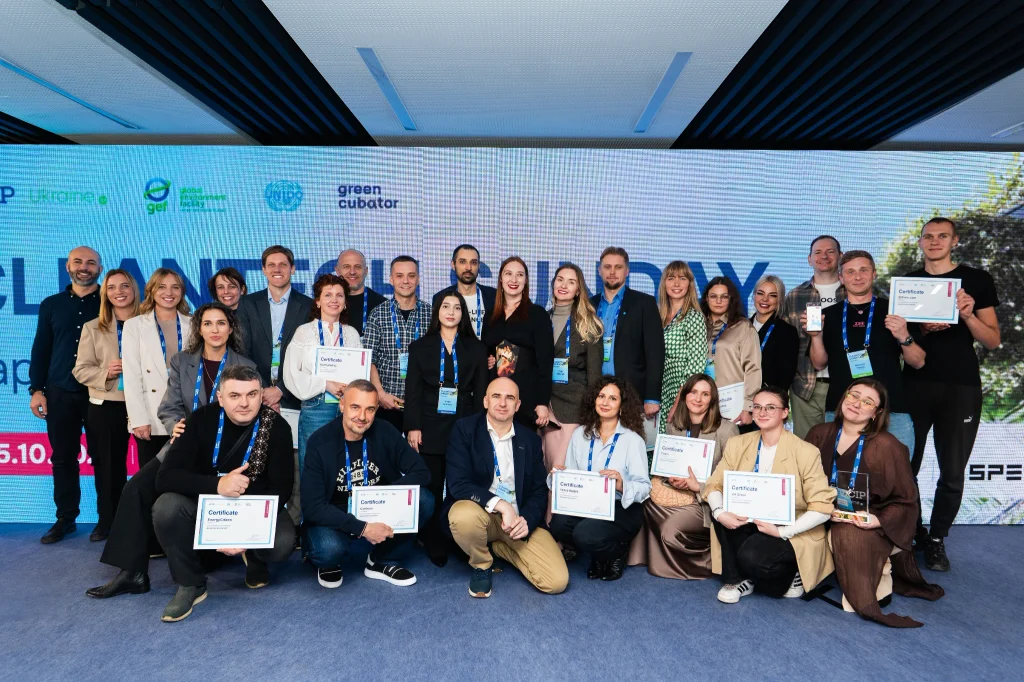
Selecting the winners of an acceleration program, discussing green innovation startups, sharing experience, and building partnerships to take initiatives further: that was the second Cleantech Sunday festival, hosted by Greencubator.
On Sunday, October 25, the final event of the Global Cleantech Innovation Program 2.0 (GCIP 2.0) took place. The program is run by UNIDO in 17 countries with support from the Global Environment Facility and is implemented in Ukraine by Greencubator.
Thirteen Ukrainian teams took the stage to deliver their graduation pitches after six months of work on projects spanning energy efficiency and renewable energy, clean transport, recycling and waste management, and even sustainable fashion.
The Jury and Winners of This Year’s Cleantech Sunday
The finalists’ pitches were evaluated by an experienced jury:
Roman Puchko, co-founder and CEO of ReThink, co-founder of ReSolve, a consulting team that guides organizations through the transition to a circular economy, and an advocate for green innovation in Ukraine;
Olena Kalibaba, CEO of the Ukrainian Social Venture Fund and co-founder of SILab Ukraine, who has worked with startups for over 15 years and knows how to turn an idea into a viable business;
Yurii Vlasyuk, Chairman of the Board of the Ukrainian Makers Association and Director of Innovation Development at Kyiv Aviation Institute (KAI), who is building the university’s engineering and technology ecosystem;
Olena Skyrta, Investment Director at SMRK VC Fund, co-founder and board member of INSCIENCE, an expert in science-intensive innovation and a popularizer of science in Ukraine.
The jury named the following winners of the GCIP Ukraine 2.0 advanced acceleration track:
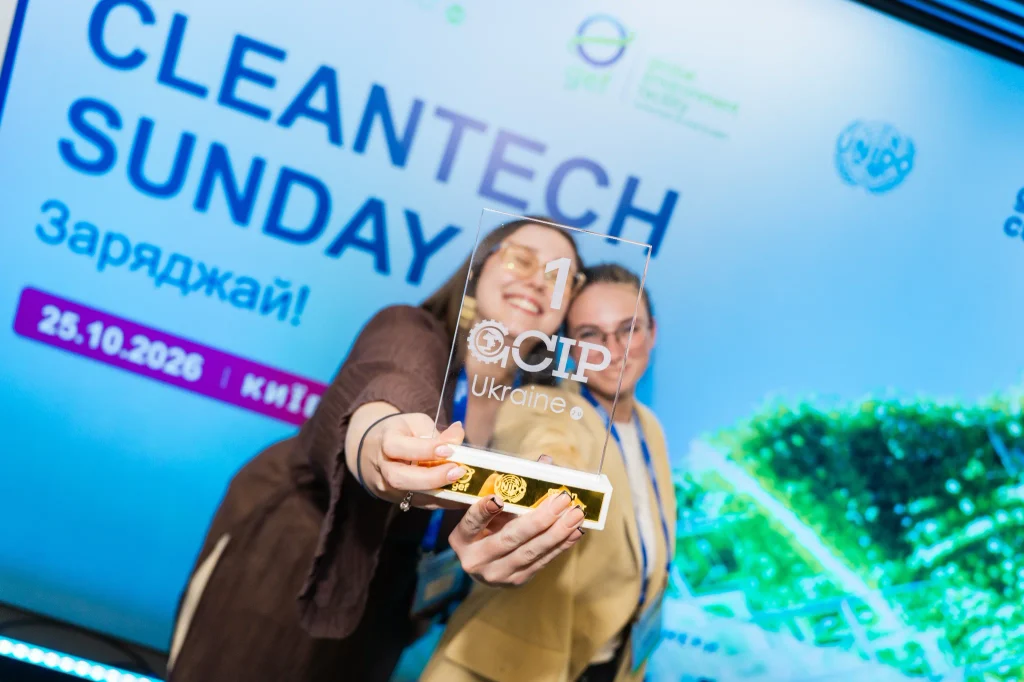
1st place: UA Green, a Ukrainian manufacturer that designs and builds small wind turbines for businesses, communities, farms, and private users.
2nd place: Recycle UA, a tech startup that has launched the world’s first marketplace for secondary raw materials. Through digitalization, it turns waste into a source of revenue for businesses and homeowners’ associations, while helping collection companies cut the cost of gathering recyclables.
3rd place: YES REEDS, a company that produces and sells reed drinking straws under the “Yes Straws” brand and is developing deep processing of raw materials.
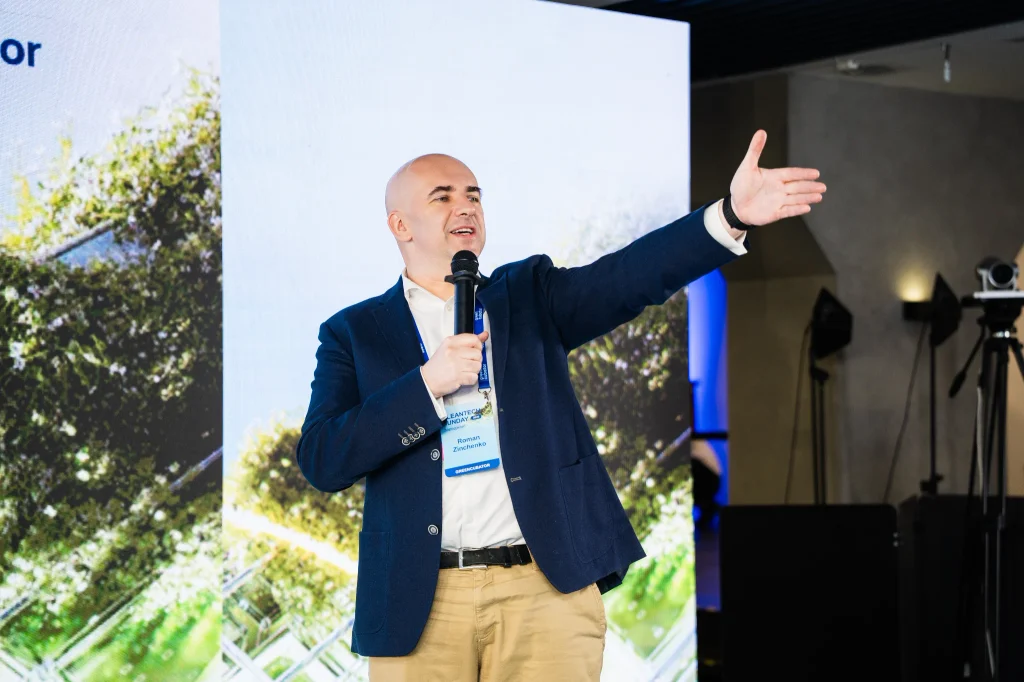
“What you’ve signed up for is really about growing a garden. It’s a story that takes years, a serious commitment. So I wish you patience, love, stubbornness, and persistence. These are the ingredients your garden will grow from, and they are why we’ll celebrate what you’ve built, made, and created. Thank you for investing yourselves in this work. And thank you to our team for all the heart they put into it. It’s a true honor to watch our garden grow, bloom, and flourish!” said Roman Zinchenko, co-founder and CEO of Greencubator.
The winners will represent Ukraine at COP31, the world’s largest UN climate change conference, in Antalya, Türkiye, this November.
There Is Life After the Program
This year’s graduates will have the opportunity to meet partners and investors at Investor Connect, a closed-door event. Meanwhile, alumni of the previous cohort, Sirocco Energy, GREEN ENERGY NEST, MYCELIA TECH, and MELT WATER inc., showed that there is indeed life after acceleration. A year after completing GCIP, they shared how they raised new investment, expanded production, formed new partnerships, and are piloting new business models.
“Ukraine is positioning itself well on the international cleantech stage. Our job is to create added value and to keep building and developing green innovation in Ukraine,” urged Andrew Osadchyi, founder of Melt Water.
As a reminder, the GCIP Ukraine 2.0 advanced acceleration track ran from July and included 16 training modules covering the entire startup journey: from goal-setting, organizational development, and customer discovery to finance, marketing, sales, piloting, climate impact, manufacturing, partnerships, and scaling strategy.
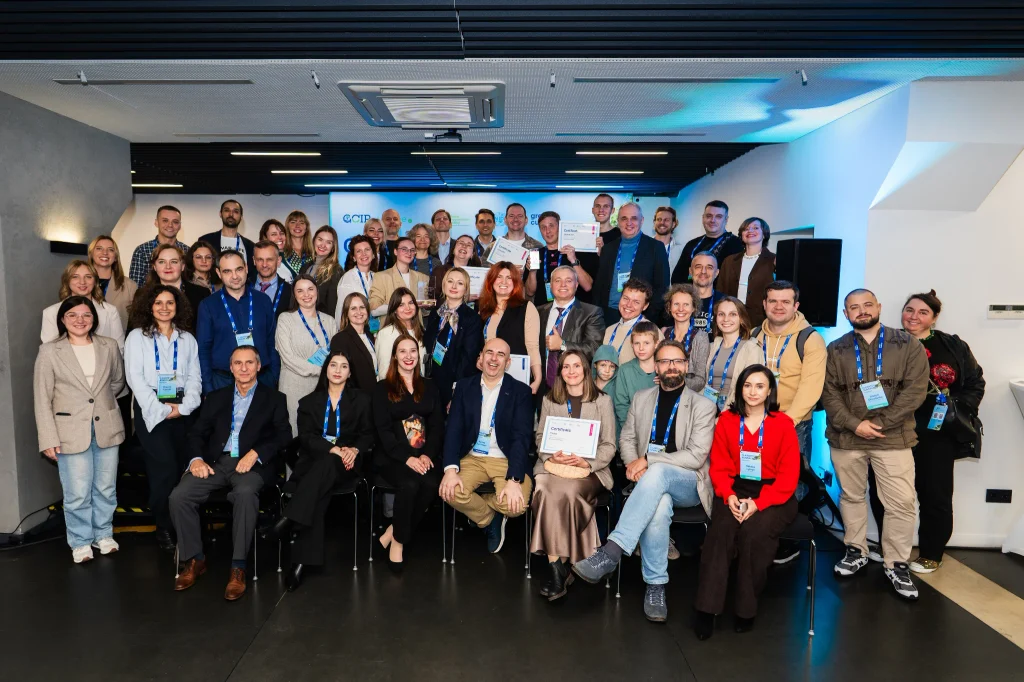
We extend our gratitude to the Solar Energy Association of Ukraine, the Ukrainian Water Association, Scatec Ukraine, and Nerex for their support and partnership.
Media partners of Cleantech Sunday were SPEKA, Mind.ua, and Rubryka. LCF Group served as the acceleration program’s legal partner, and UNIT.City as its innovation partner.
Applications for the third GCIP Ukraine cohort will open soon, so stay tuned for the announcement!
Cleantech Policy Mechanisms: Rethinking the “Rules of the Game” for Green Innovation
Ukrainian startups are already creating world-class climate innovations – from green energy to the circular economy. The question is whether Ukraine’s policy and market framework is keeping pace with this innovation. The Cleantech Policy Mechanisms study explores the policy mechanisms needed to support clean technology development in Ukraine. We conducted the study to identify policy decisions that can help accelerate the development of Ukraine’s cleantech sector.
About the Study and Its Importance
We conducted the study as part of the international GCIP Ukraine 2.0 program, which we implement in Ukraine with support from UNIDO and the GEF. The study is particularly relevant in the context of war and reconstruction, as Ukraine needs green solutions for sustainable development more than ever. Promoting climate innovation not only helps address energy and environmental challenges but also strengthens our energy independence and helps mitigate the environmental damage caused by military operations.
Despite these challenges, Ukraine’s innovation ecosystem continues to deliver strong results and maintain its pace of development even during the war. Our startups are not slowing down, and the global community is supporting them – international partnerships and the diaspora are actively contributing to the sector’s development. However, fully realizing this potential requires a strong local foundation – policies and an environment that can accelerate cleantech development and strengthen the ecosystem further.
How the Report Was Prepared: International Methodology and the Ukrainian Context
The report was a collaborative effort involving dozens of stakeholders – entrepreneurs, government officials, experts, and investors. Their experience and insights formed the basis of our analysis, ensuring that the report reflects the real needs of the ecosystem rather than theory alone.
To give the study a clear structure and a global perspective, we used an international methodology developed by Cleantech Group in collaboration with UNIDO. This methodology allows for a systematic assessment of a country’s readiness to scale up clean technologies across several areas – from innovation policy and ecosystem support to cluster development and the engagement of all market players. Using this approach, we compared Ukraine’s realities with global best practices and adapted these approaches to our context, taking into account Ukraine’s unique challenges and opportunities.
Key Challenges for Cleantech in Ukraine
Our study identified several key barriers that prevent Ukrainian green innovations from reaching their full potential:
From Challenges to Solutions: Key Recommendations
Despite these challenges, there is a way forward. In the report, we proposed a series of strategic steps, ranging from immediate measures to long-term solutions. Here are several key areas that capture the essence of our recommendations:
The full set of recommendations also covers other areas – from education and talent development to integration into European green initiatives.
Why Stakeholder Engagement Matters
The workshop brought together government agencies, startups, investors, and ecosystem organizations to discuss the proposed policy recommendations from different perspectives. This dialogue helped connect policy proposals with the realities faced by both institutions and businesses – from practical implementation constraints to the needs of companies working in the cleantech market.
For government representatives, it was an opportunity to receive direct feedback from the ecosystem and assess how feasible the proposed measures would be in practice. At the same time, startups, investors, and ecosystem organizations could discuss specific policy tools with the government, understand the rationale behind the proposed approaches, and bring their own experience into the discussion.
This exchange was particularly important at the final stage of the study, as it allowed the policy recommendations and their implementation roadmap to be discussed and validated together with representatives of the cleantech ecosystem.
Together – through professional dialogue and expert validation – we are moving closer to policies that truly support green innovation in Ukraine.
Acceleration That Actually Works: Why 94% Attendance Is More Than Just a Number
The article was written by Olexandra Danchenko
Greencubator completed the first cohort of the GCIP Ukraine 2.0 accelerator program – and we have both results to share and something to say about what real acceleration looks like.
Because it turns out: we built something genuinely exceptional. Not just by Ukrainian standards – but by global ones.
The word “acceleration” entered the business lexicon in the early 2000s. In 2005, Y Combinator set the standard that still defines the industry: a short, intensive, structured format with a clear endpoint – Demo Day in front of investors.
But an accelerator is not a course. It is not a business school.
A learning program transfers knowledge. An accelerator transforms a company. One is measured in lecture hours and completed modules. The other is measured in signed deals, raised capital, changed business models, and teams entering new markets. Learning happens in a classroom. Acceleration happens in real business conditions – where every mentoring session converts immediately into action.
That’s why the world’s leading accelerators are ruthless about who they admit: they’re not interested in headcount. They’re interested in outcomes.
For context: Cleantech Open (USA, 20+ years running) works with 100–150 companies per year and reports that over 70% of their alumni are still operating, having collectively raised more than $3 billion. Most specialized climate accelerators take 10–25 teams per cohort, and programs like TechX in the UK deliberately cap at 12 startups per cycle for depth of engagement.
A Wharton Business School study covering 8,580 startups across 408 accelerators in 176 countries found that accelerated companies are 3.4% more likely to raise venture capital, attract on average $1.8M more in their first post-program year, and grow revenue and headcount faster.
Acceleration is a catalyst – but only when it’s the right one: deep, specific, with quality mentors, and no noise.
GCIP – the Global Cleantech Innovation Programme – is a global initiative by UNIDO (UN) and the Global Environment Facility (GEF), supporting climate startups across 17 countries on four continents, from Morocco and Nigeria to Mongolia and Uruguay. Since 2014, the program has supported over 1,650 companies and aims to reduce greenhouse gas emissions by more than 10 million metric tons by 2030.
The standard GCIP structure runs across four levels: Pre-Accelerator → National Accelerator → Advanced Accelerator → Post-Accelerator – typically spanning 5 years per country.
Ukraine became the first GCIP country to launch the Advanced Accelerator level. Not the basics – the most intensive, most individualized format in the program. We did this in the context of a full-scale war, with a compressed timeline (3 years instead of 5), without a second national partner, and from zero – no prior cohorts, no alumni network.
In other words: we entered at the highest difficulty level. Without a warmup.
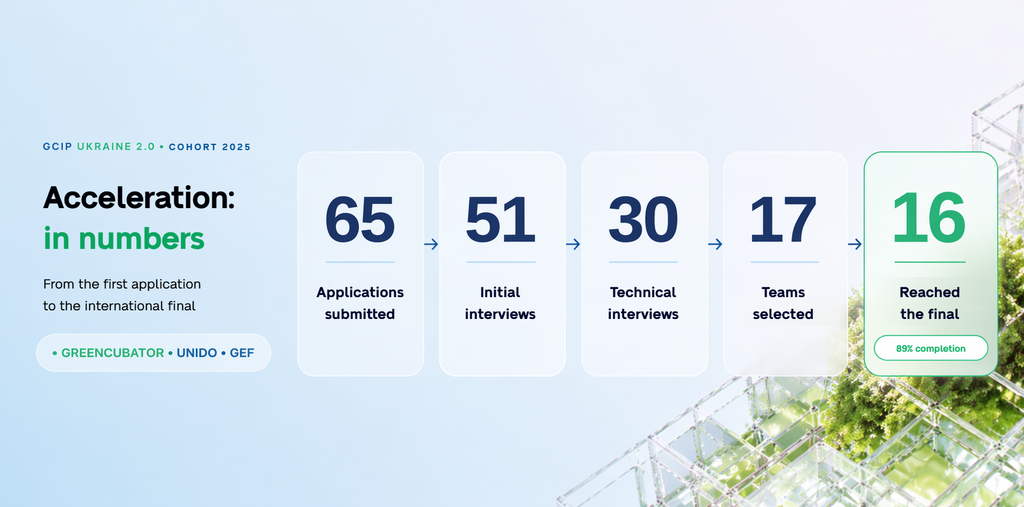
The cohort spanned startups in solar energy, eco-housing, biotechnology and new materials, clean water, e-mobility, eco-cosmetics, and logistics. Technology readiness ranged from TRL 5 to TRL 9 – from field-tested prototypes to market-ready products.
8 out of 16 startups had women founders, co-founders, or women in senior leadership – noteworthy at a time when female founders globally receive just 2.1% of all venture capital.
The program included:
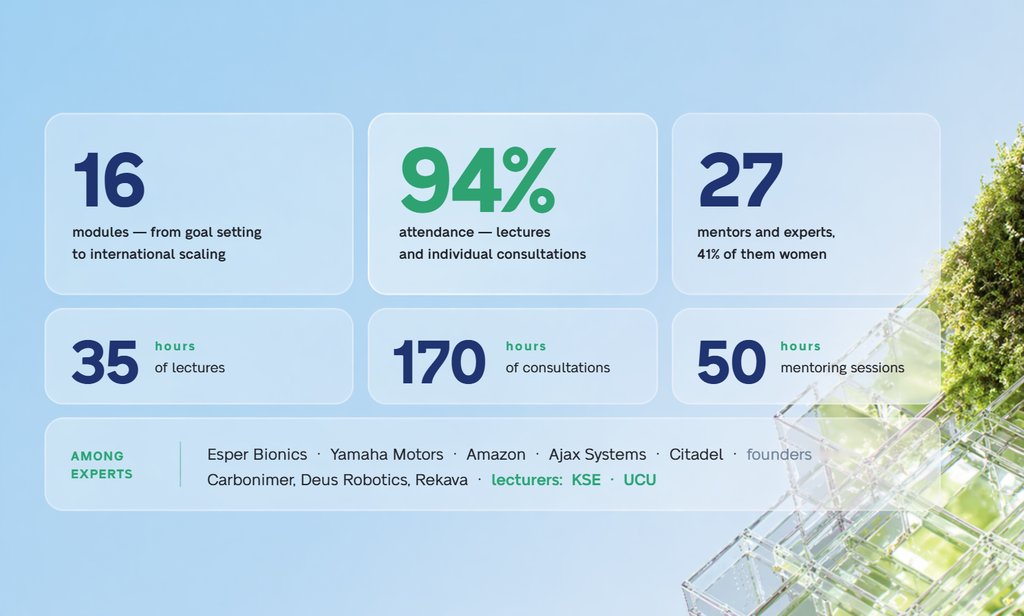
And the most important metric: 94% average attendance – across both lectures and individual consultations.
Why does this matter? Accelerator programs rarely see full participation. Founders are running businesses in parallel; engagement naturally fluctuates, and many teams lose intensity before the finish line. In most programs, only a fraction of participants reach Demo Day fully engaged. In ours, 88% of teams took the stage at Demo Day. A 94% attendance rate means one thing: people showed up every time because every time was worth showing up for.
“We’ve been through various incubators and accelerators, but here everything clicked – the right information at the right moment. Marketing, sales, pitch preparation, legal – every component mattered. I’m convinced: we were in the right place at the right time.” – Andrew Osadchyi, founder of MELT WATER Inc.
“Participating in the program was a turning point – we moved from a lab experiment to a structured green business. The key achievement was implementing an environmental impact accounting system (waste and CO₂) that became our competitive advantage with B2B partners.” – Rufat Raimov, co-founder of Fungiwoongi
“This accelerator gave us exactly the push we were missing – not just to absorb information, but to turn it into action immediately. We defined a clear value proposition, prepared a professional pitch deck, signed our first client, and delivered our first climate impact report.” – Anastasiia Kondratieva, founder of SPOGAD
“The biggest impact was a clear methodology for building organizational structure. The ICP module was a real breakthrough – the table seemed overwhelming at first, but filling it in made it immediately clear where to direct our sales.” – Maksym Havrylenko, founder of Ochis
“We looked at our project from a new angle – changed the name, repositioned the brand, deepened the tech layer. The KPI module was a turning point: it gave us energy and clear checkpoints.” – Volodymyr Strokan, PhD, founder of Green Energy Nest by Mindfour Group
One more thing worth mentioning: program participants are eligible for grants of up to $20,000 to develop their climate solutions – real financial support for green businesses, and the first grant of its kind specifically for cleantech on the Ukrainian market. But tellingly, the grant barely comes up in founder testimonials. Founders talk about transformation: in mindset, in process, in positioning. Grants matter – but as participants themselves say, that’s far from the biggest value.
We saw real transformation in this cohort – teams rethinking their names and positioning, calculating unit economics for the first time, signing first clients, entering international markets. All during the program itself.
We also saw something else during the selection process: there are so many teams that already have a product and early customers, but lack structure, network, and the right guidance to reach the next level.
Our conclusion: not every team needs the Advanced Accelerator – but every strong team deserves the chance to prove it.
Cleantech Sunday is back: on October 25, the ecosystem gathers for the second time
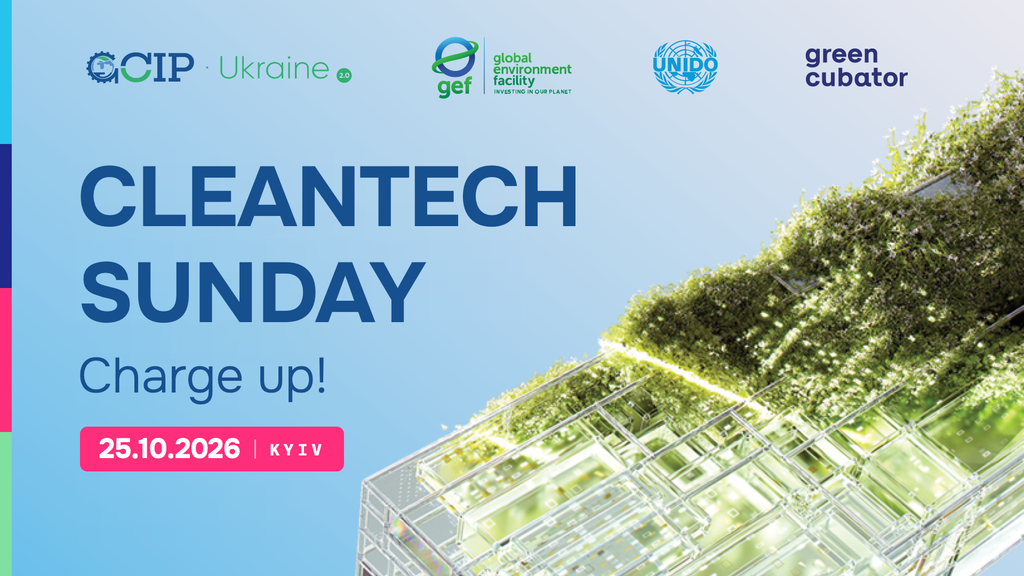
On October 25, 13 Advanced Acceleration finalists will take the stage at Cleantech Sunday 2026 to present their solutions to investors, jury members, and industry experts. This marks the culmination of the current GCIP Ukraine 2.0 acceleration cycle. The event is organized by Greencubator – Ukraine’s leading cleantech accelerator, which has spent 17 years building the country’s green entrepreneurship ecosystem – and this is the second year running that Greencubator has held it.
Over the past six months, the finalist teams have worked on their business models, unit economics, and investment readiness alongside mentors who don’t let weak spots slide. What they’ll present on October 25 are solutions already tested by the market and by people – not drafts on slides.
The day’s programme includes finalist pitches, a panel with alumni from the previous cohort on what’s changed in their business a year after the accelerator, an awards ceremony, and networking that rarely wraps up when the official programme does.
For investors, it’s a chance to see investment-ready teams in action, before the media catches on. For the rest of the ecosystem, it’s an opportunity to be in the same room as the people building cleantech in Ukraine right now – and walk away with new connections, not just impressions.
The day includes:
Register for Cleantech Sunday 2026.
Spots are limited due to safety considerations – the exact venue will be shared directly with confirmed registered participants.
Interested in joining the next GCIP Ukraine intake? Get in touch at gcip@greencubator.info.
GCIP Ukraine 2.0 is implemented by Greencubator in partnership with UNIDO, with support from the Global Environment Facility (GEF).
From Ideas to Real Solutions: 14 Cleantech Teams on Their GCIP 2026 Journey
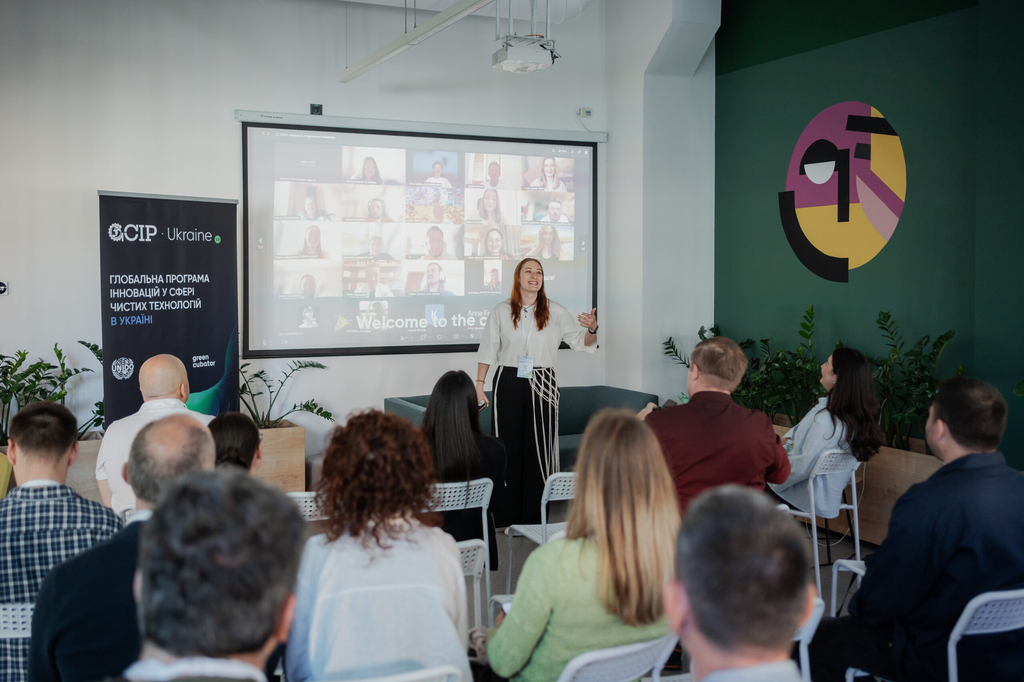
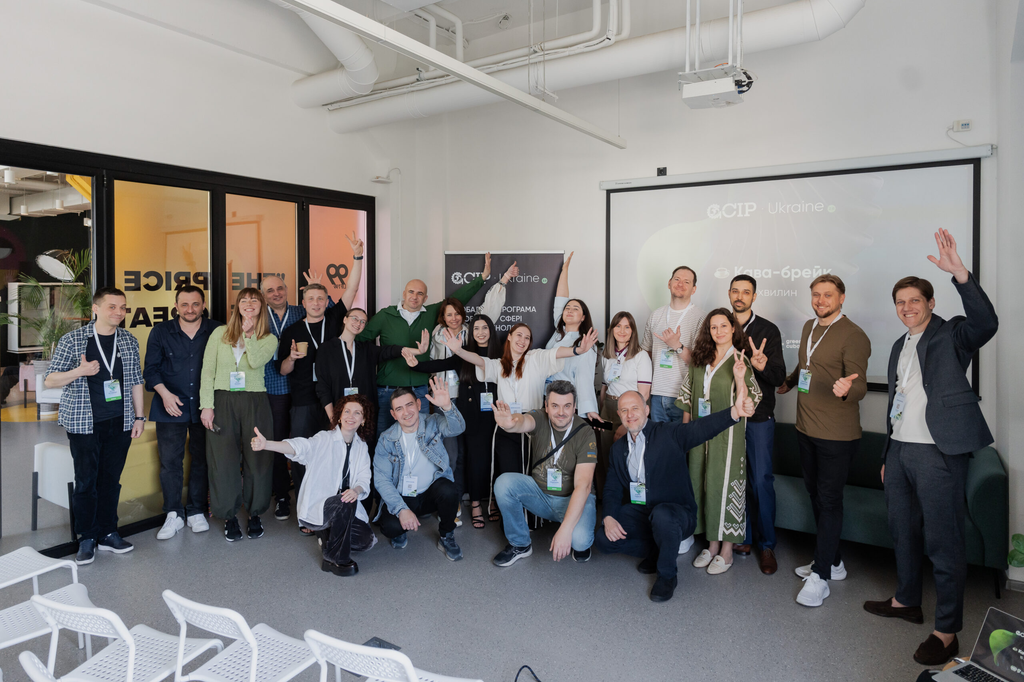
Innovation isn’t driven by corporations – it’s driven by people. That’s why our five-month GCIP 2026 acceleration program began not with dry presentations and formalities, but with building a real community. After a thorough selection process involving dozens of strong applications, we chose 14 teams whose solutions have the potential to transform energy, mobility, and sustainable manufacturing. On May 9, we brought the entire cohort together in Kyiv for an in-person Kick-off event that officially launched the program.
How the Kick-off Went
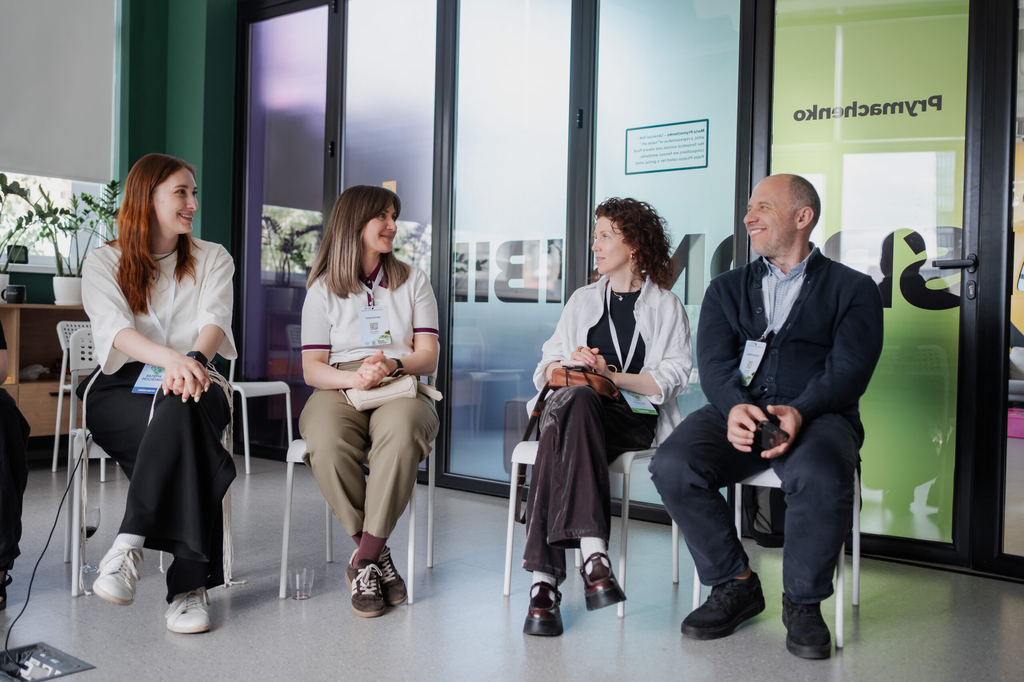
The main goal of the day was simple – to create a space where the teams could truly connect. So instead of polished pitches and formal networking, we took a different approach. The participants shared stories of failure – real mistakes they had made while developing their products. They played “Two Truths and a Lie,” where they had to guess which fact about a fellow participant was made up and which two were true. They also energized the room with the “Valid or Sus?” icebreaker, which revealed just how different people’s comfort zones could be and helped ease the tension of meeting for the first time.
Sharing these honest, sometimes funny and sometimes difficult stories helped the teams build stronger connections. Behind every startup are real people who make mistakes, learn from them, and keep moving forward. Between activities, each team presented its pitch. Hearing several pitches back-to-back made it easy to spot connections: one team might be facing a challenge that another had already tackled, while an approach developed by one team could prove useful to another.
14 Teams, 14 Cleantech Solutions
This year’s cohort brought together a diverse mix of solutions for Ukraine’s green recovery. To give a clearer picture of the scope of their work, we grouped the teams by focus area.
Energy Innovation & Efficiency
Sustainable Mobility and Infrastructure
Circular Economy and New Materials
The Journey So Far
14 teams. 14 different stories. One shared goal – to build a resilient economy through innovation. Throughout the program, the teams have been testing hypotheses, taking part in expert sessions, receiving mentorship, and meeting with investors. The program is now approaching Demo Day, where the teams will present their projects to investors and the broader ecosystem.
Throughout GCIP 2026, we have continued to build Ukraine’s green community – a network of founders, experts, mentors, and partners working together to create better conditions for green businesses. One strong team can be a success story. A community of strong teams that know and support one another can change the game.
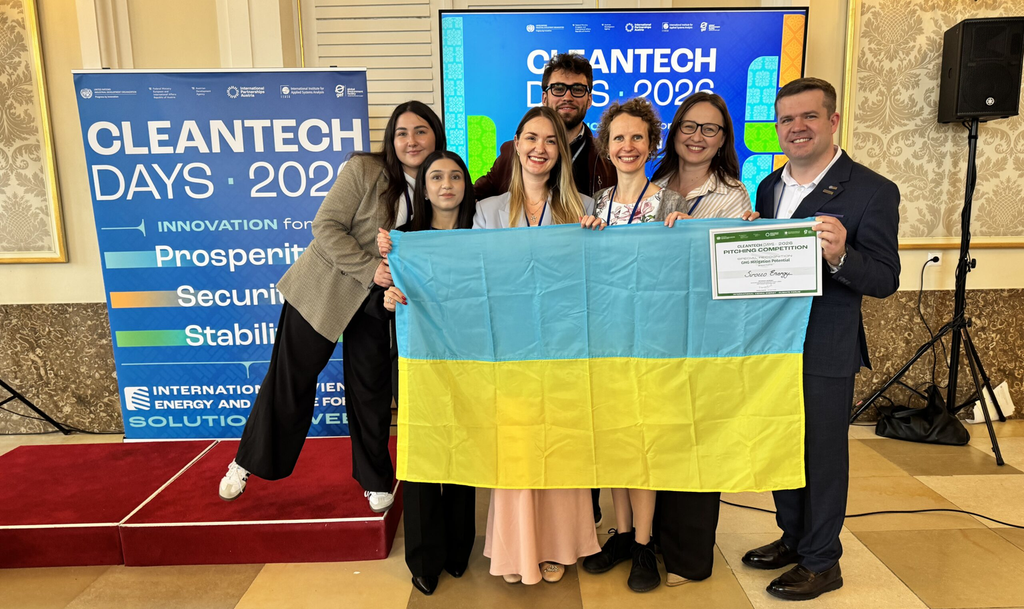
The Greencubator team and GCIP Ukraine alumni went to Vienna for UNIDO Cleantech Days 2026, which brought together policymakers, investors, and innovators from around the world. This year’s theme, “Innovation for Security, Prosperity, and Stability,” closely reflected the reality Ukrainian cleantech founders face every day. Greencubator took the stage at the event, joined by entrepreneurs who are already scaling their innovations in international markets.
Day 1: Systemic Barriers and the Pace of Innovation
On April 7, GCIP Ukraine Project Coordinator Oleksandra Danchenko took part in a panel discussion, where she raised a critical issue: the gaps in current innovation systems. Global discussions on inclusivity often focus on closing the gender gap, but Oleksandra offered a different perspective: “The gender gap in tech entrepreneurship is relatively narrow, and we see this in practice. For example, women make up about 45% of the participants in the GCIP Ukraine program.”
She highlighted the structural barriers to accessing green markets: closed networks, the geographic isolation of regional companies, and the difficulty of identifying businesses that simply do not position themselves as cleantech companies. She also emphasized the speed of decision-making: securing funding can take years, creating a critical barrier to growth.
Oleksandra said that the so-called ‘valley of death’ isn’t always about a lack of funding, but about the time it takes to access it. “Without speed and clarity, even the strongest systems will fail to attract the very players they are meant to support.” She called on institutions to create faster, more transparent pathways for cleantech companies.
Day 2: The Gap Between Innovation and Investment
On April 8, Olha Zubchyk, Project Manager of Climate Innovation Vouchers at Greencubator, continued the discussion on the gap between innovation and real investment.
She highlighted a key problem with evaluating cleantech startups through the lens of rapid growth: climate technologies require complex engineering, testing, and significant capital before they can scale. “The capital problem is only partly about a lack of capital. The deeper issue is how capital is structured, provided, and integrated into real business.”
In Ukraine, these challenges are compounded by broader risks. Global investors often tell startups to “wait until the war ends.” Yet Ukrainian founders are already operating and building under pressure, and Ukraine should be seen as a source of powerful industrial innovation.
To make real progress, startups need early customers, quick grants, and strategic connections. “For startups, time is measured differently. It is measured by survival.” Olha called for the funding system to adapt and ended her talk with a challenge to the market: “Today, the bottleneck is only partly about innovation. The question is whether finance can evolve fast enough to keep pace.”
GCIP in Action: Alumni in the Top 3
After the expert sessions, two GCIP Ukraine alumni took the stage to present their businesses and went on to make the Top 3 in the Growth category. Despite strong competition, the teams showed that Ukrainian green solutions are ready for global markets and international success. Their results also show how the program prepares companies to scale and build partnerships with international investors.
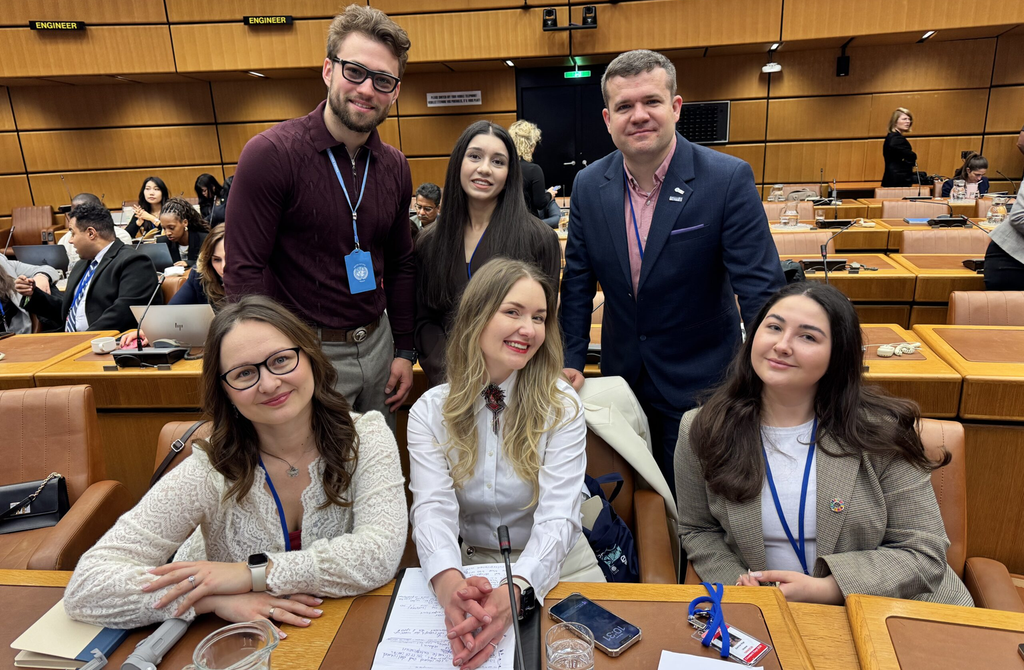
Partners and Solution Builders
The global climate transition will be driven by companies capable of scaling solutions under extreme conditions. Ukrainian founders are already building a sustainable future, and the recognition they received from experts in Vienna is clear evidence of that. Events like UNIDO Cleantech Days give the world an opportunity to see the green innovation ecosystem in action.
Our presence in Vienna and the finalists’ success reflect the results of Greencubator’s years of work. GCIP alumni are ready for international partnerships, equipped with expert tools and the network they need.
These results show that Ukrainian cleantech is not only ready to enter global markets, but is already becoming part of the international innovation ecosystem.
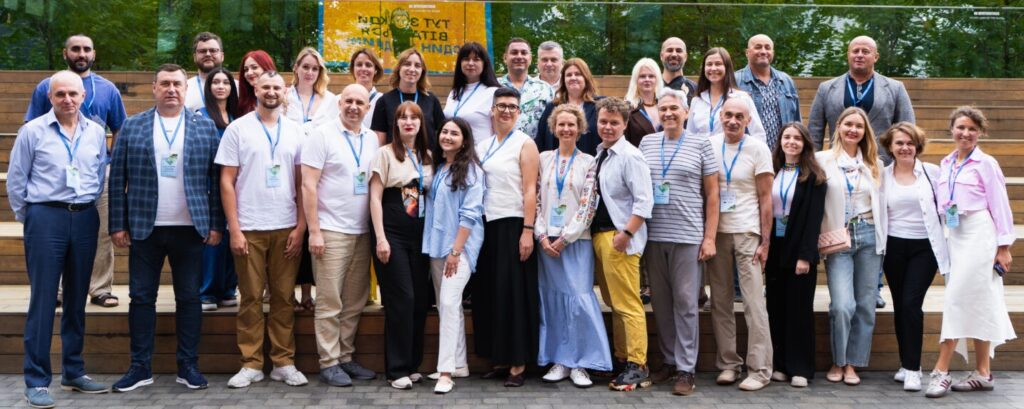
We have caught our breath a little – and are finally ready to share photos with you from our in-person gathering of GCIP Ukraine 2.0 Advanced Accelerator participants.
It was an eventful and inspiring day of introductions, discussions, hugs, and quality networking. We are delighted to have brought together so many diverse, strong, and motivated businesses so they could get to know one another, feel supported, and show each other just how brilliant they are.
Participants shared that the meeting was an opportunity for them to broaden their horizons, find like-minded individuals, and even connect with potential partners. And for us, it served as further confirmation of just how much drive and resilience exists within Ukrainian innovators!
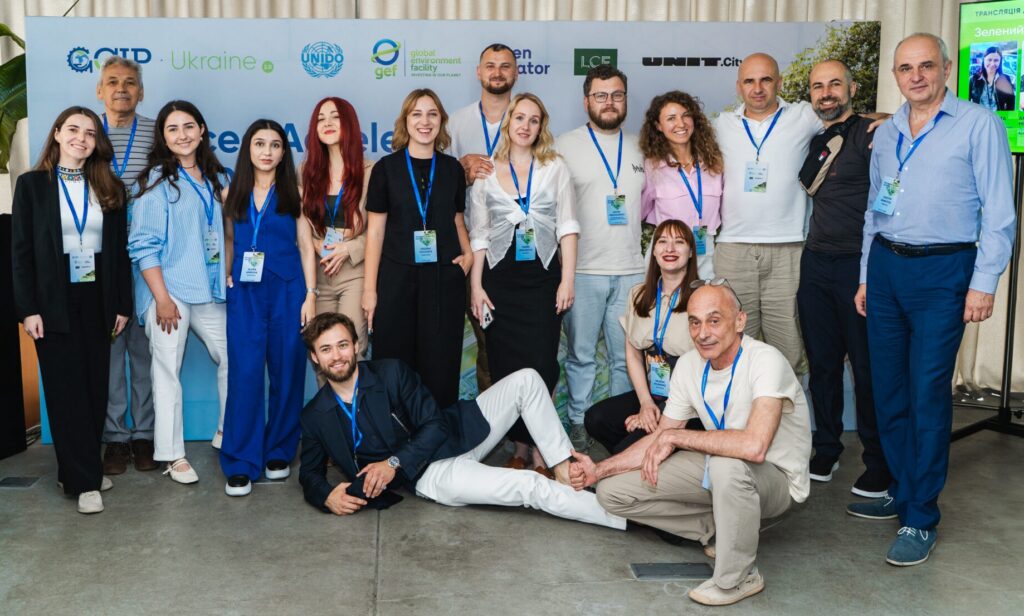
We were particularly pleased to welcome unexpected but very welcome guests: Julia Bialetska (CEO of S.Lab – Sustainable Laboratory, Entrepreneur in Residence of our programme) and Iryna Hubarets (Representation of the European Union in Ukraine).
Furthermore, as part of the event, an online discussion took place titled “Green Business During the War: Is It Timely?”. Speakers Yuliana Onishchuk, Andrii Medvedenko, Viktor Khomenko, Mariia Shamota, and Roman Zinchenkodiscussed the challenges and prospects of green transformations in wartime.
“It was incredibly interesting to listen to presentations and give feedback to participants – if only you knew how many cool ‘mature’ projects and founders we have, who, even despite having their production facilities smashed by the Russians, are getting back on their feet and continuing to build green businesses! The Greencubator team has a special skill for finding and uniting such unstoppable people,” shares Mariia Shamota.
Our immense gratitude goes to UNIT.City for providing the perfect venue, to LCF Law Group for their legal partnership, and to the organising team at Event Envoy, led by Anastasiia Polinkova, for their attention to detail and for creating such a magical atmosphere!
GCIP Ukraine 2025 is a free, three-month acceleration programme for Ukrainian companies in the clean technology sector, implemented by UNIDO – United Nations Industrial Development Organisation, greencubator, and the GEF.
Lying ahead are training sessions, workshops, mentorship, and participation in industry events. We are making an inspired and strong start!
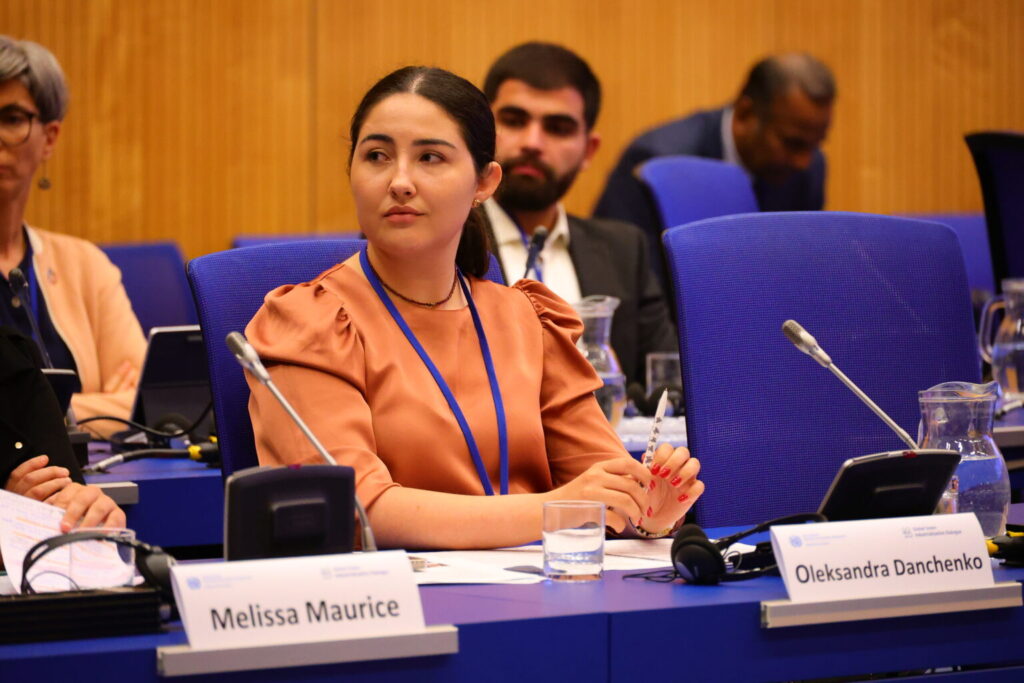
In July, we visited the heart of the international green discussion – the Global Green Industrialisation Dialogue (GGID 2025), held in Vienna under the auspices of our partners, UNIDO.
Greencubator was represented at the event by Valeriia Mosienko, Head of the GCIP Ukraine 2.0 accelerator program, and Olexandra Danchenko, GCIP Ukraine 2.0 Project Coordinator. Furthermore, Olexandra had the opportunity to speak at the roundtable discussion “Future Talents: Skills for the Next Generation of Green Industry.”
Her speech addressed the reality Ukraine faces following the destruction of over 30% of its energy infrastructure due to the aggressive Russo-Ukrainian war:
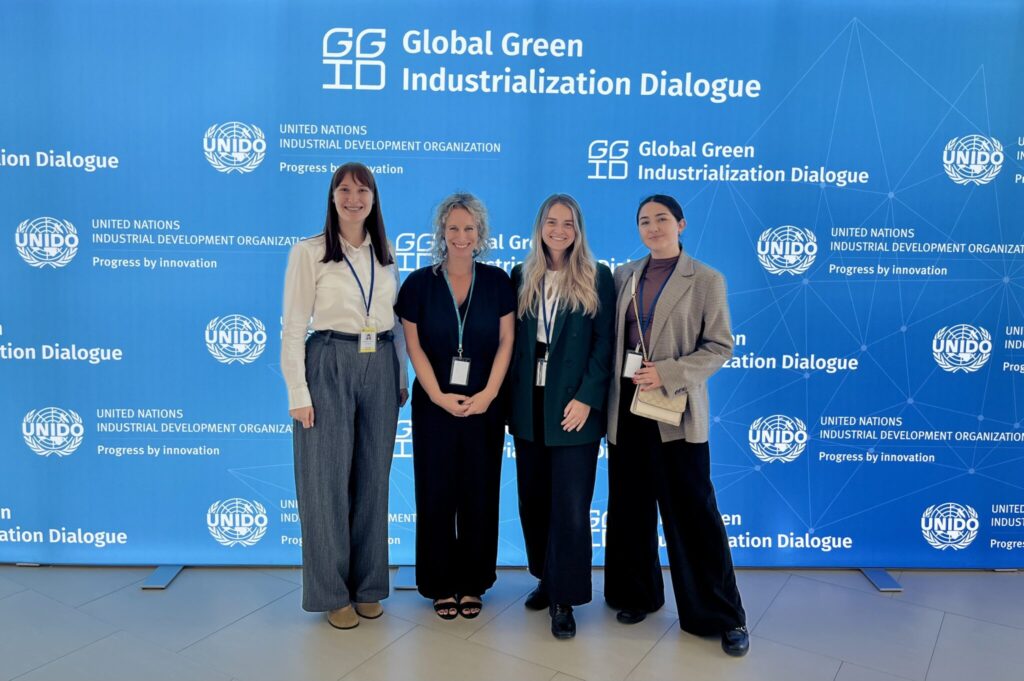
This dialogue encompassed a much wider range of topics: from financing and technology to human capital and supply chains. However, the most valuable aspect for us was that the Ukrainian experience was voiced at the level of global discourse and was truly heard.
We thank UNIDO – United Nations Industrial Development Organisation for the invitation, trust, and continued support! We are happy to be part of GCIP – a global program for developing innovation in clean technologies. We continue working – for a strong, green, and recovered Ukraine!
On November 23, 2025, Greencubator invites you to Cleantech Sunday — the day when Ukraine’s cleantech ecosystem comes together to exchange the energy of innovation.
This is an ecosystem event uniting startups, investors, partners, and key industry players to get charged up and recharge others — sharing knowledge, inspiring one another, and accelerating the development of cleantech and greentech in Ukraine.
The event program includes:
About the Program: Cleantech Sunday is part of the Global Cleantech Innovation Programme 2.0 (GCIP 2.0) in Ukraine, implemented by Greencubator in partnership with the United Nations Industrial Development Organisation (UNIDO) and the Global Environment Facility (GEF). GCIP supports the development of Ukrainian startups, shapes favorable policies for clean technologies, and helps attract investment in climate innovation.
Date: Sunday, November 23, 2025 Location: Kyiv, UNIT.City
To learn more and purchase your ticket for Cleantech Sunday, please email us at gcip@greencubator.info!
Cleantech Sunday 2025 Media Partners: Mind.ua, SPEKA, ShoTam.
From September 1–5, four Ukrainian startups will present their climate solutions at Cleantech Days 2025 in Istanbul — a forum organised by UNIDO, TÜBİTAK, and IOM that unites over 130 participants from 20 countries!
The event will gather innovators, investors, policymakers, and ecosystem drivers. The 5-day program features panel discussions on financing green solutions, the role of policies, and regional cooperation, as well as a startup pitching competition and CTD RealTalks.
As part of the Greencubator delegation, participants of the GCIP Ukraine 2.0 advanced accelerator will showcase their innovations:
Additionally, the Ukrainian delegation will take active roles in the program:
For Ukrainian startups, participating in Cleantech Days offers a valuable chance to gain global visibility and find new markets, partners, and investors. For the world, it is an opportunity to see how our country is building innovative infrastructure despite the war.